
I Am All of Them: Richard Lewis and the Price of the Ticket
A deeper look at Richard Lewis's solo exhibition
The Price of the Ticket
Saginaw Art Museum, Closing April 25
Melannie Chard
Apr 20, 2026
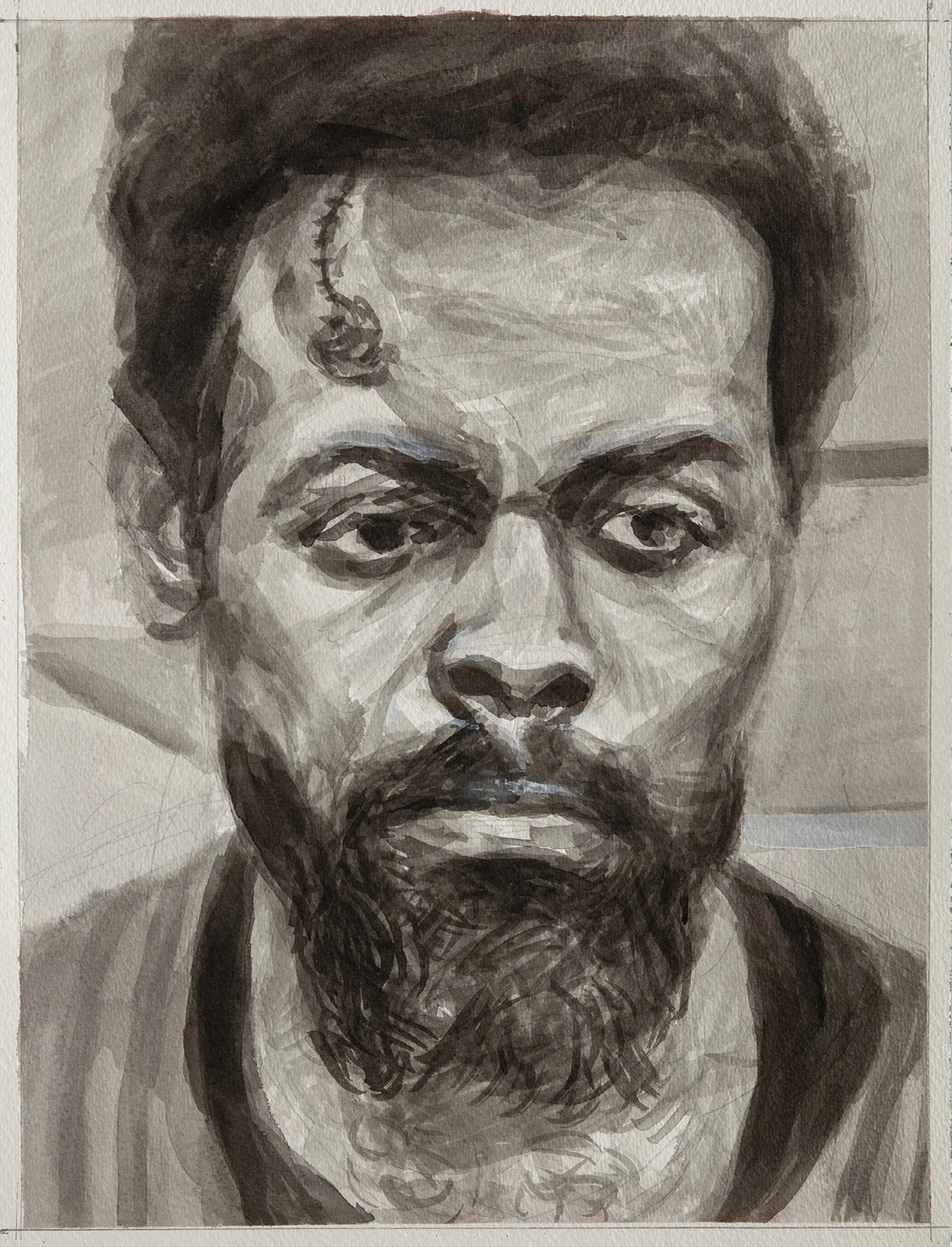
RICHARD LEWIS, Boxing Portrait - Amiri Baraka (after Fred McDarrah), 2024 | Ink and gouache on watercolor paper, 16 × 12 inches
At a recent artist talk moderated by Mario Moore, Richard Lewis spoke about The Price of the Ticket at the Saginaw Art Museum. He doesn't describe the exhibition as overly symbolic, but the more you sit with it, the more the series opens into something extraordinarily layered.
(View the Talk)
Lewis says the idea of the series evolved from a poem by Etheridge Knight,The Idea of Ancestry, where the speaker describes a prison wall covered with photographs of family. Faces that, over time, collapse into one another.
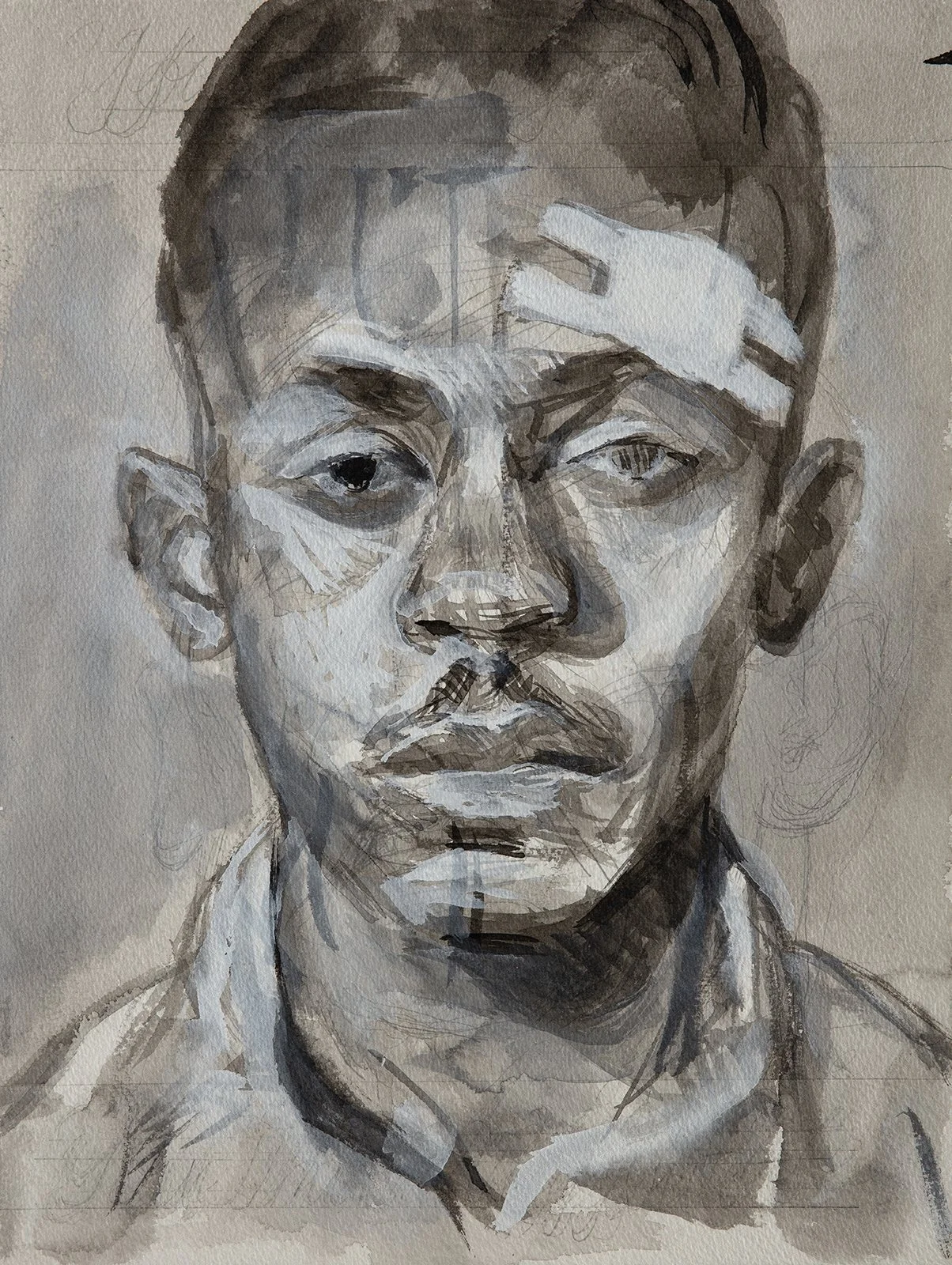
RICHARD LEWIS, Boxing Portrait - Ralph Ellison, 2025
Excerpt from Etheridge Knight “Idea of Ancestors”
Taped to the wall of my cell are 47 pictures: 47 black
faces: my father, mother, grandmothers (1 dead) , grand-
fathers (both dead) , brothers, sisters, uncles, aunts,
cousins (1st and 2nd) , nieces, and nephews.They stare
across the space at me sprawling on my bunk.I know
their dark eyes, they know mine.I know their style,
they know mine.I am all of them, they are all of me;
they are farmers, I am a thief, I am me, they are thee.
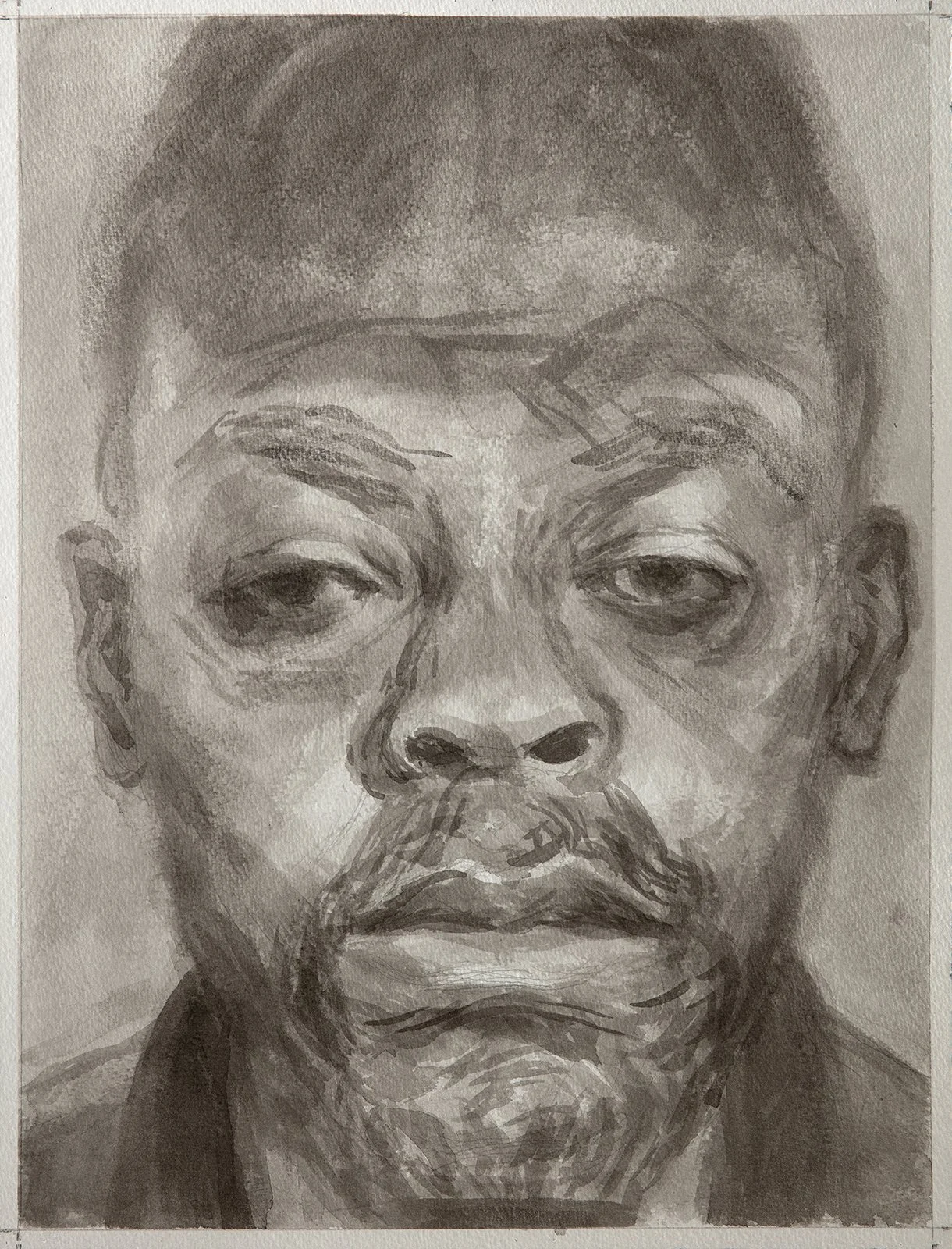
RICHARD LEWIS, Boxing Self Portrait, 2026
Lewis' portraits operate in that same space. Each figure is distinct, but none stands alone. Together, they form a shared identity and are are direct and unflinching, many with features of Nkisi figures.
Lewis has said, “All of these portraits, in a way, are Nkisi.” Traditionally, Nkisi figures serve as intermediaries. They are objects that hold power and connect the physical and spiritual worlds. Here, the people on the wall become Lewis' own Nkisi: a link between past and present. But then Lewis adds another layer and the figures are not just depicted as Nkisi but also as boxers.
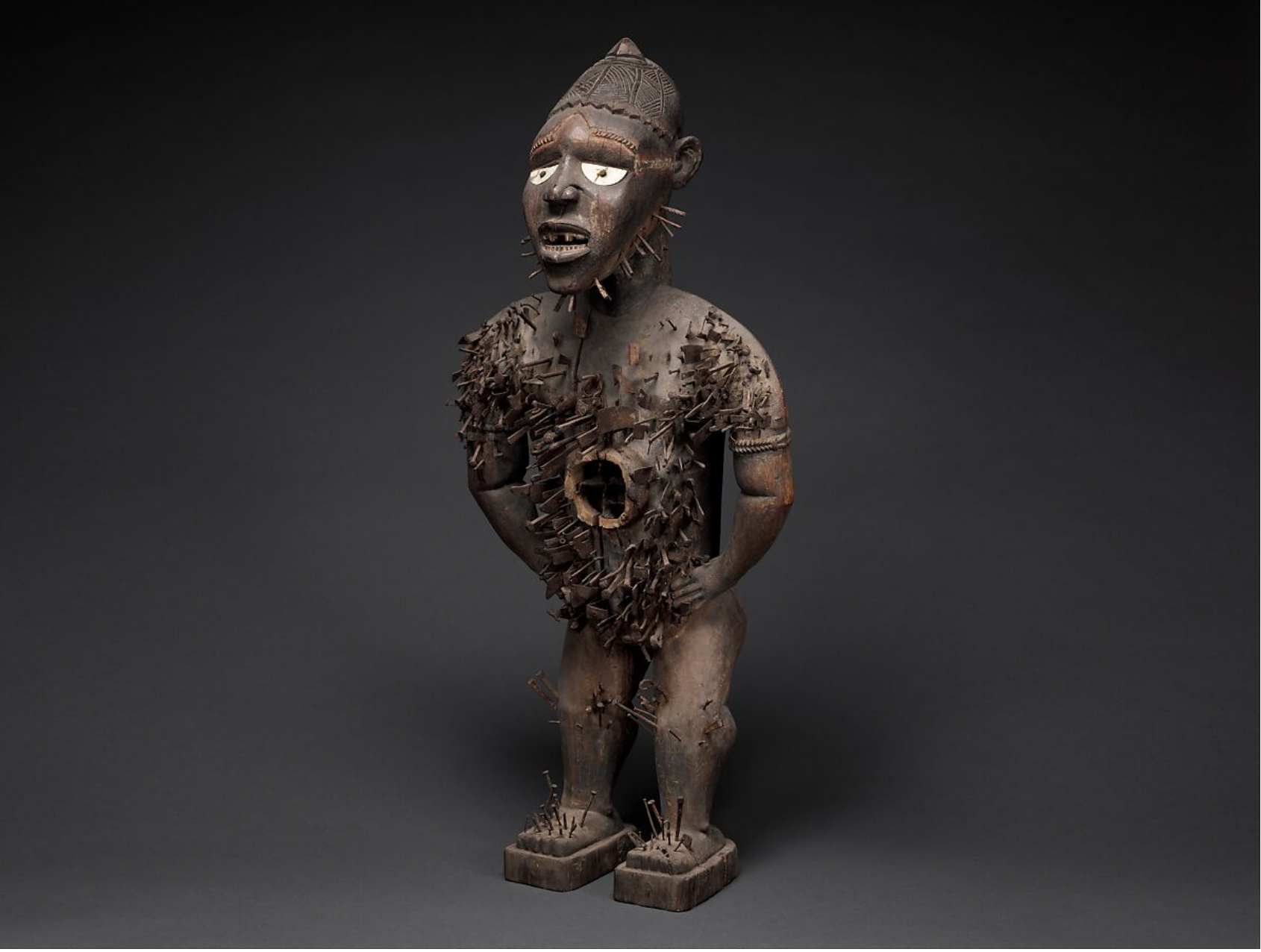
Mangaaka Power Figure (Nkisi N'Kondi),Yombe-Kongo artist and nganga (ritual specialist) ca. 1880–1900, Metropolitan Museum of Art, New York, New York
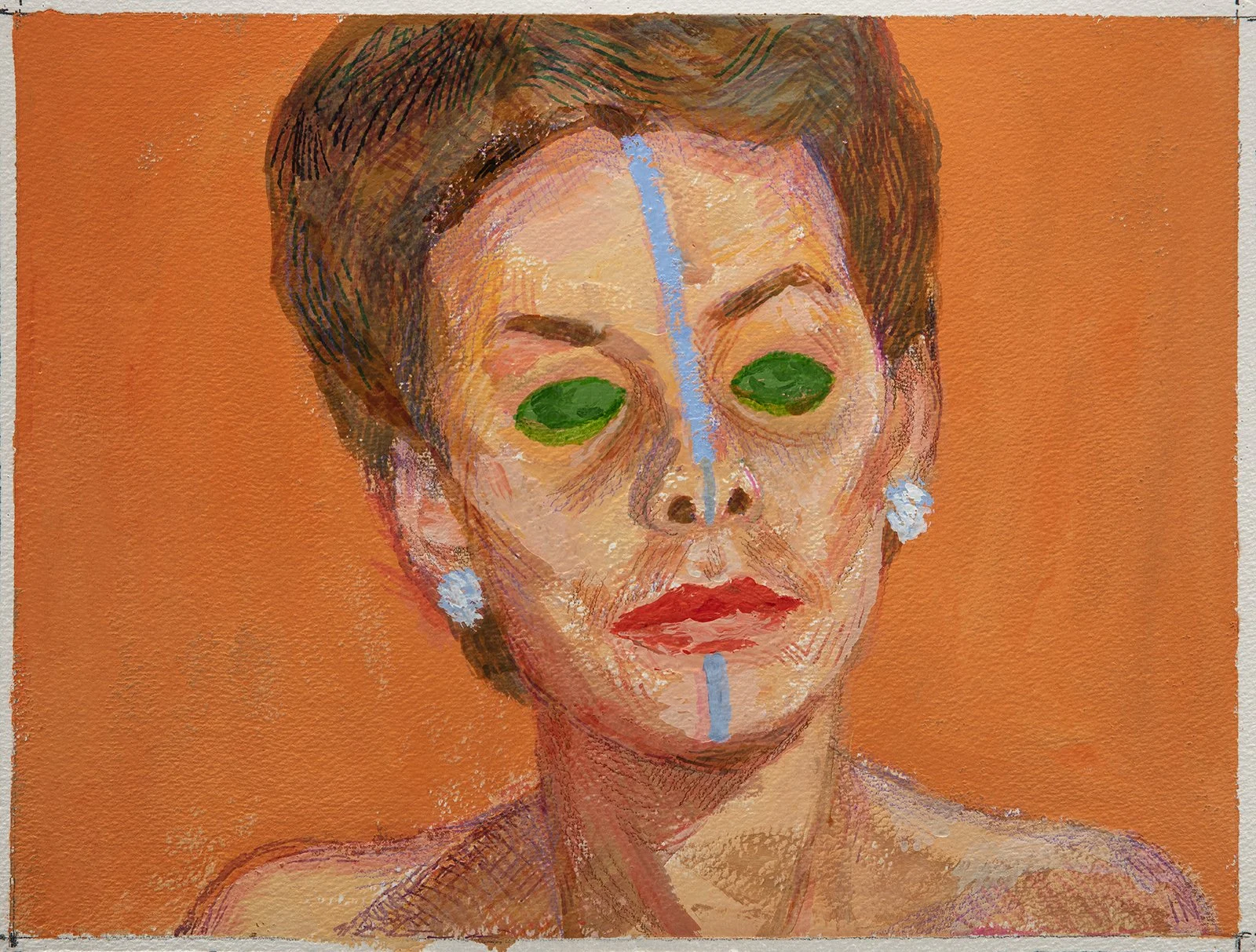
RICHARD LEWIS, Nkisi Lena Horne, 2026 | Ink, colored pencil and gouache on watercolor paper 16 × 12 inches
Boxing is not new territory for Lewis. It's a subject he has returned to throughout his practice, drawn to both its physical intensity and what it represents. The Price of the Ticket, began with Black writers he felt were being overlooked or erased that he recast as fighters, figures navigating a system that is both exploitative and visible. The series evolved to include not just writers, but poets, and cultural leaders from the 1930s - 1970s placing them within a structure Lewis has familiarity with. Through cuts, bruising and bandages, the figures are seen visibly carrying the marks of a systemic struggle that was invisible to many.
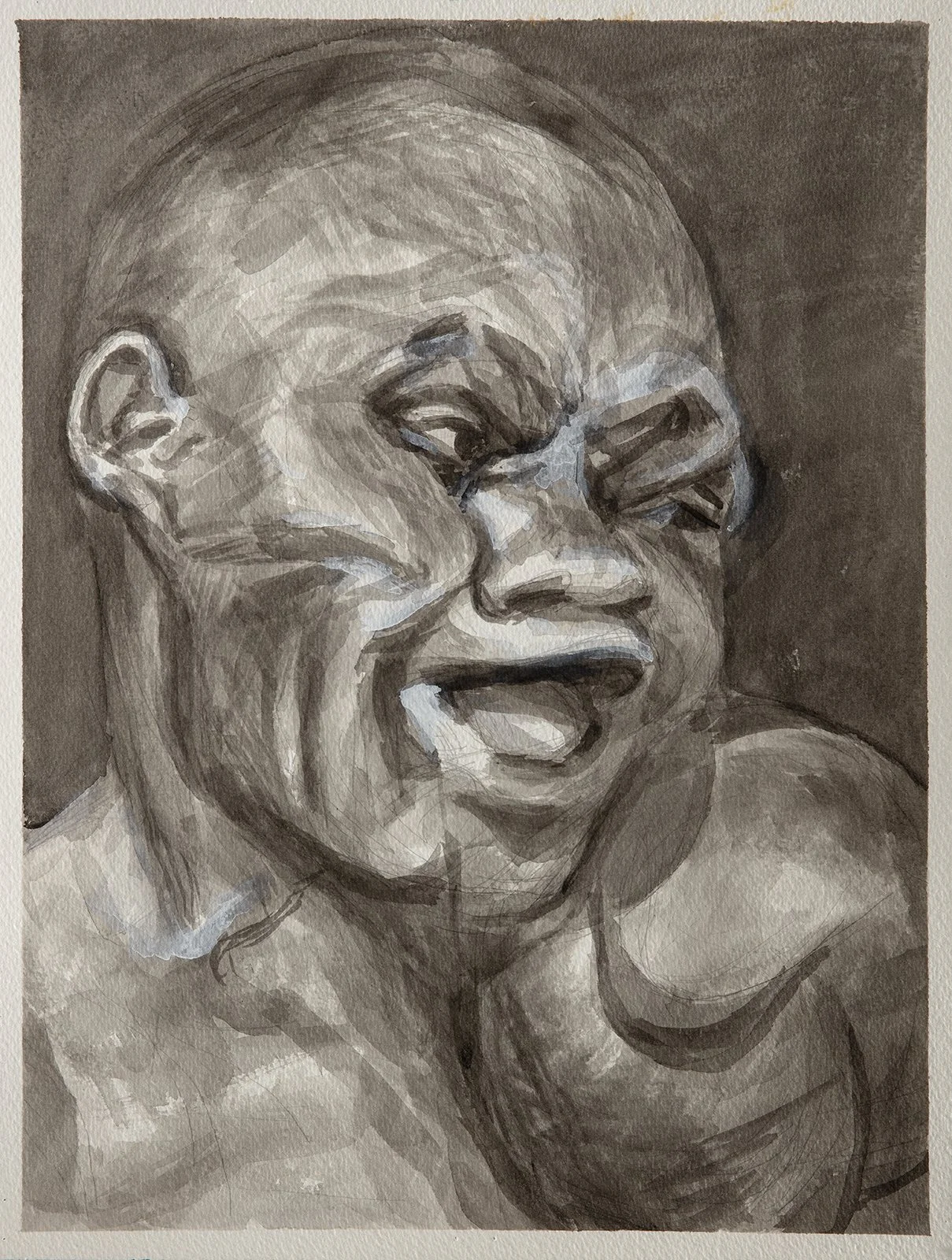
Boxing Portrait - Jersey Joe Walcott (after Herb Scharfman), 2024
The title The Price of the Ticket comes from James Baldwin, who described it as the cost of living fully and consciously in the world. For Lewis, depicting boxers becomes a way to think through that cost.
Boxing itself carries a particular tension for Lewis. It has historically offered working-class individuals a way to survive, while at the same time turning violence into spectacle. When searching for source material, he noted how “horrifyingly easy” it was to find images of the writers he was painting, injured or beaten. That reality sits beneath the surface of the work. The portraits ask the viewer to confront that violence directly, regardless of status, recognition, or public image.
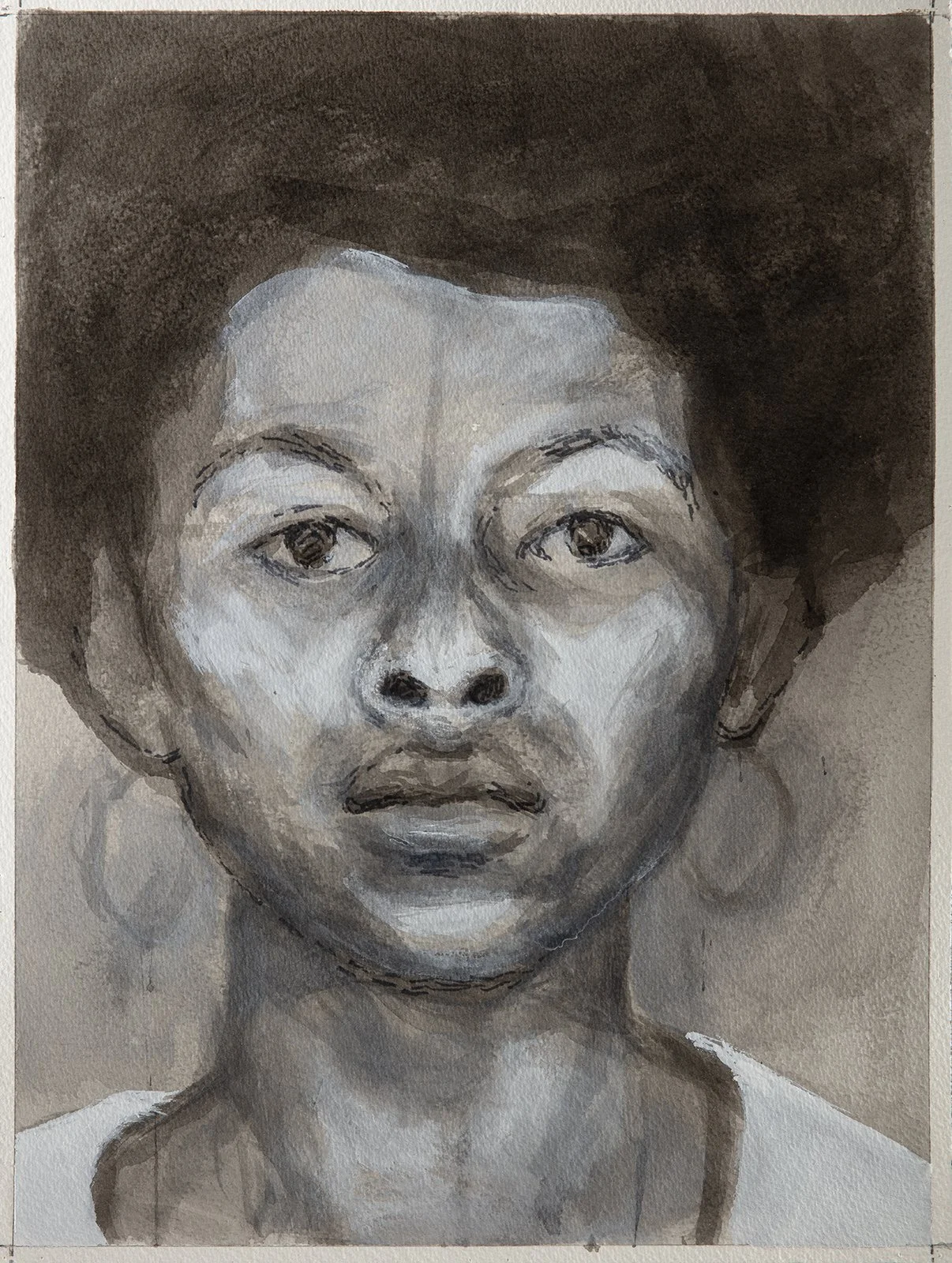
Mugshot - Assata Shakur, 2026
Lewis also points to Jacques-Louis David's “Medallion" ink wash portraits of the artist's incarcerated friends as inspiration, particularly for the use of gouache and ink. The use of gouache and ink allowed Lewis's ideas to move quickly from mind to hand and provided an immediacy that oil painting can prevent. The result feels grounded, loose and direct all at once.
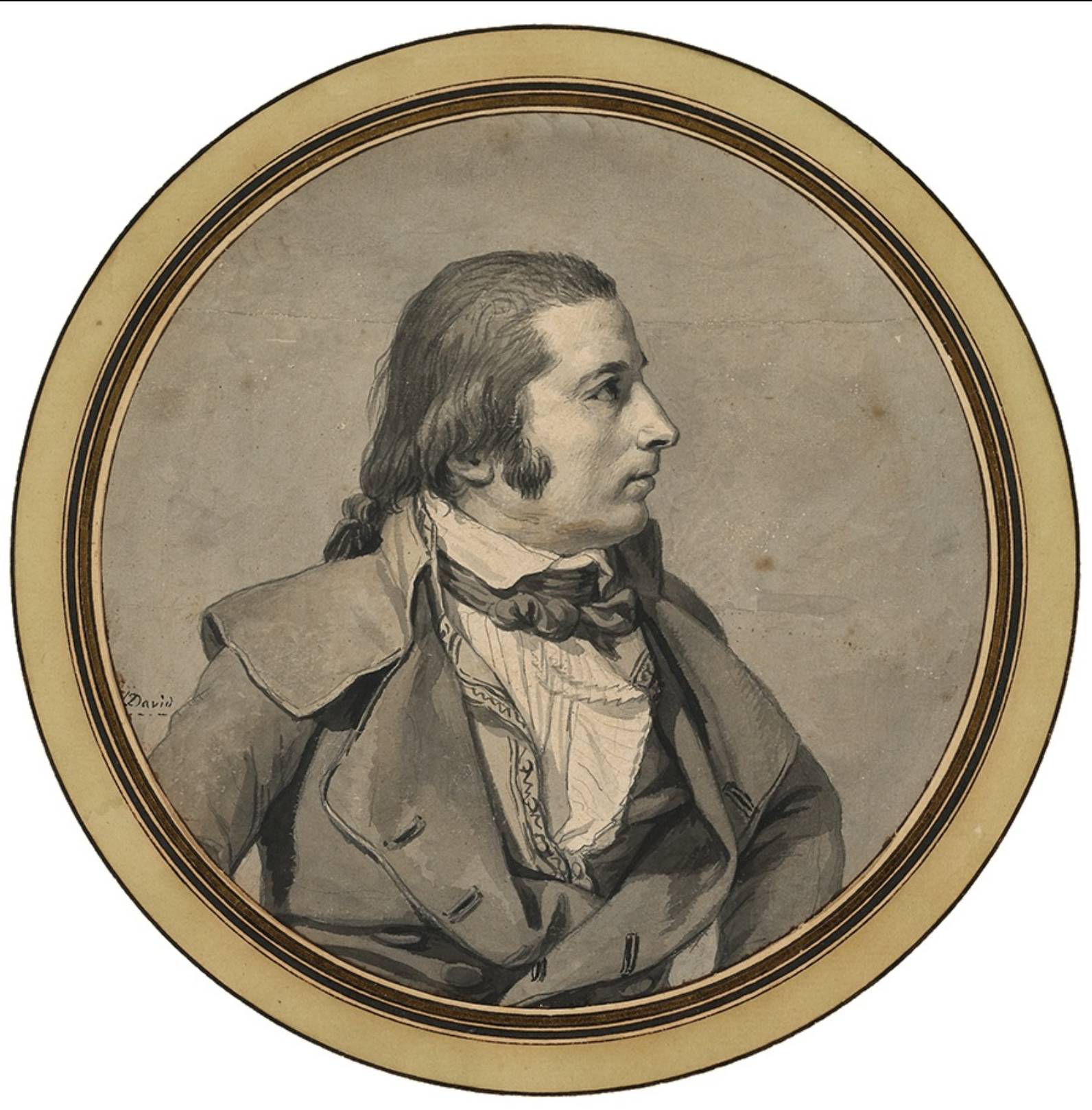
JACQUES-LOUIS DAVID, Portrait of Jeanbon Saint-André, 1795. Pen and ink, with yellow ochre over graphite. 18.3 cm diameter, Art Institute of Chicago
Taken together, the portraits in The Price of the Ticket form a collective, an accumulation of identity and history. Lewis becomes a Nkisi, a historian making sure the individual and collective stories of his subjects are remembered and carried forward. Like the faces in Knight's poem, they look back. And in doing so, become inseparable.
Below is the recorded conversation between Richard Lewis and Mario Moore, which offers a direct entry point into the work and the ideas behind it. For more on the series visit our website.
As always, thank you for reading.
See You Soon!