
Ashley Marie and a Living Surrealism
Melannie Chard
Jan 25, 2026
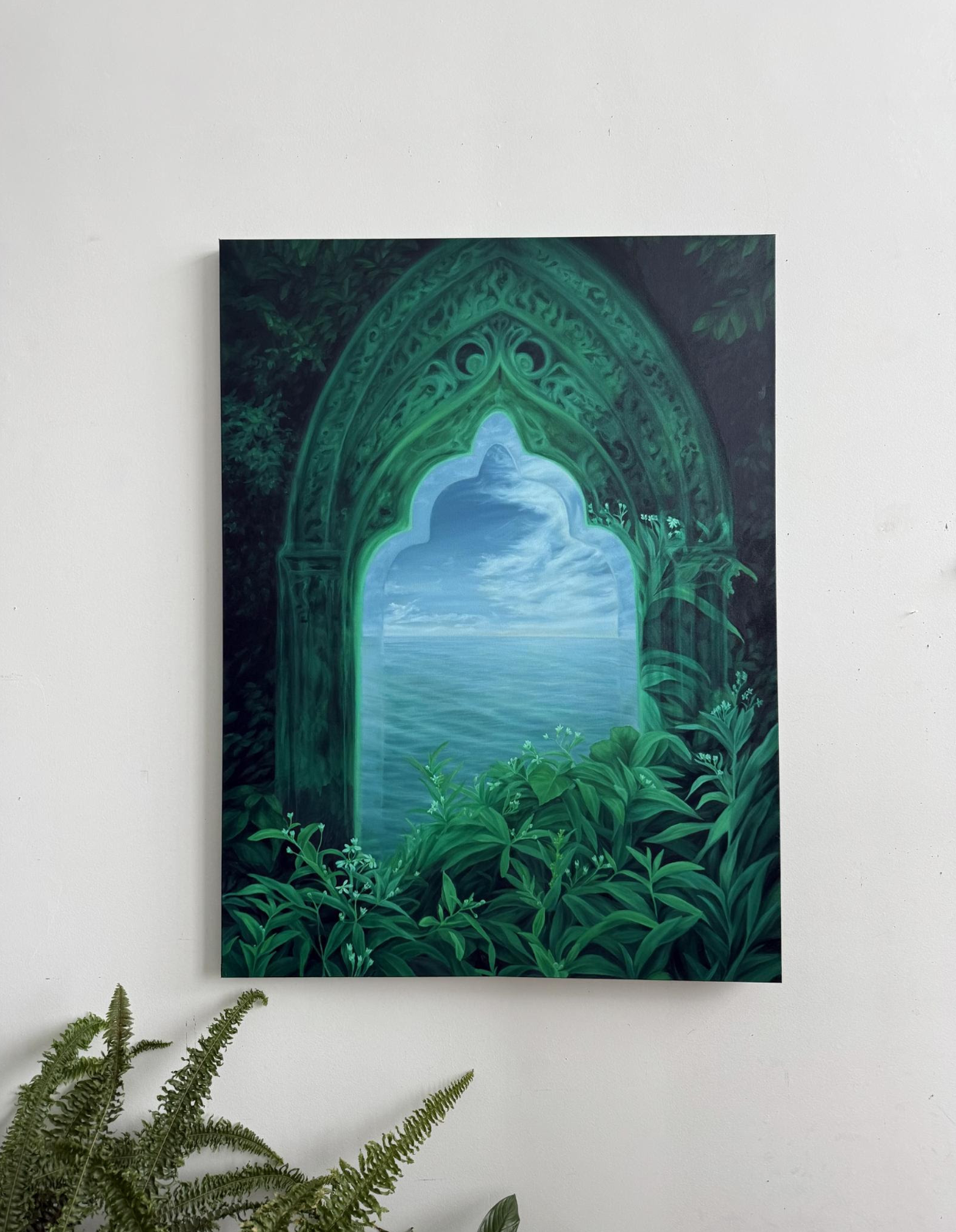
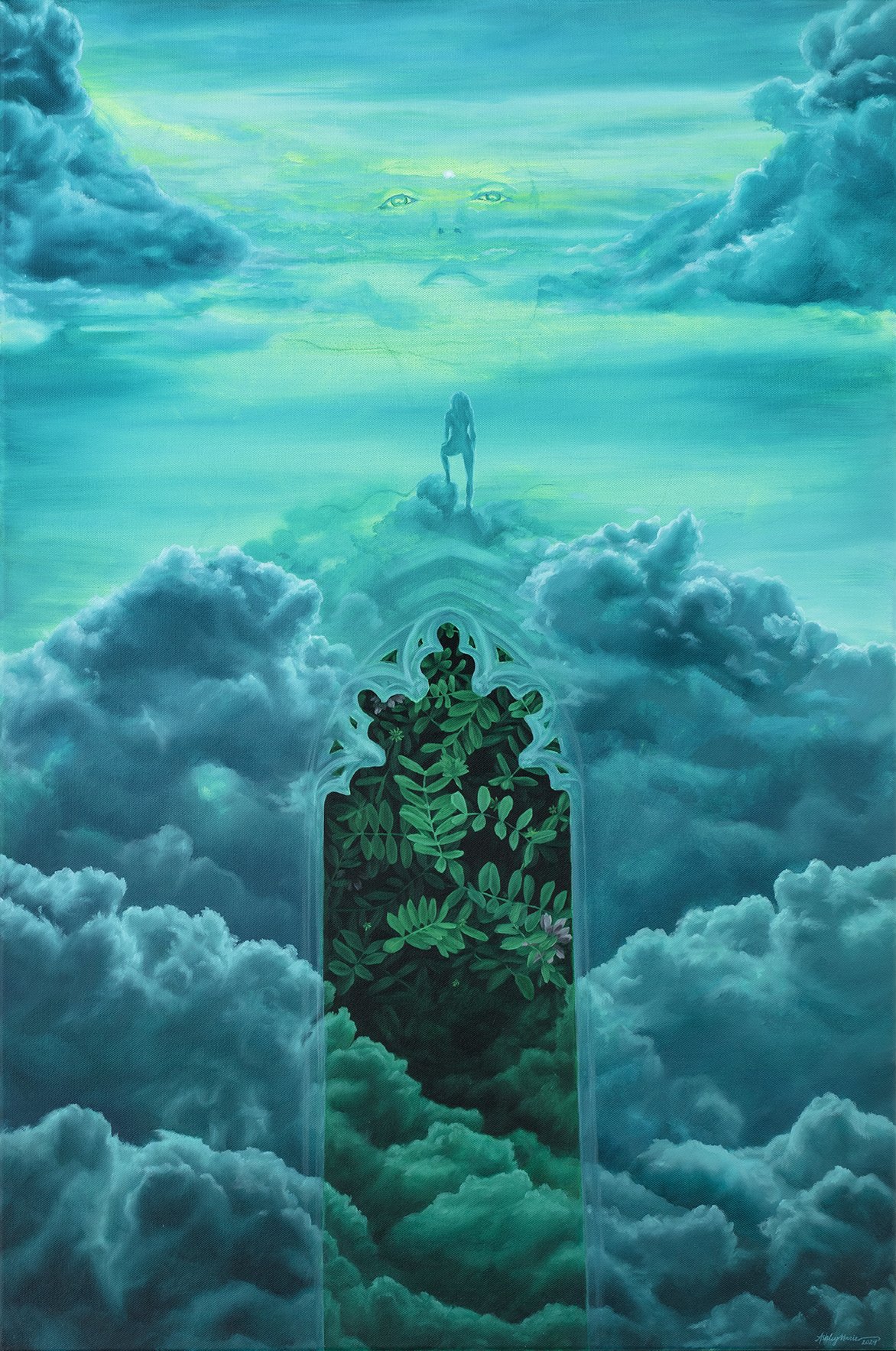
ASHLEY MARIE, Time Tides, 2026 | Oil on canvas, 48 × 36 inches
Photo: Ashley Marie
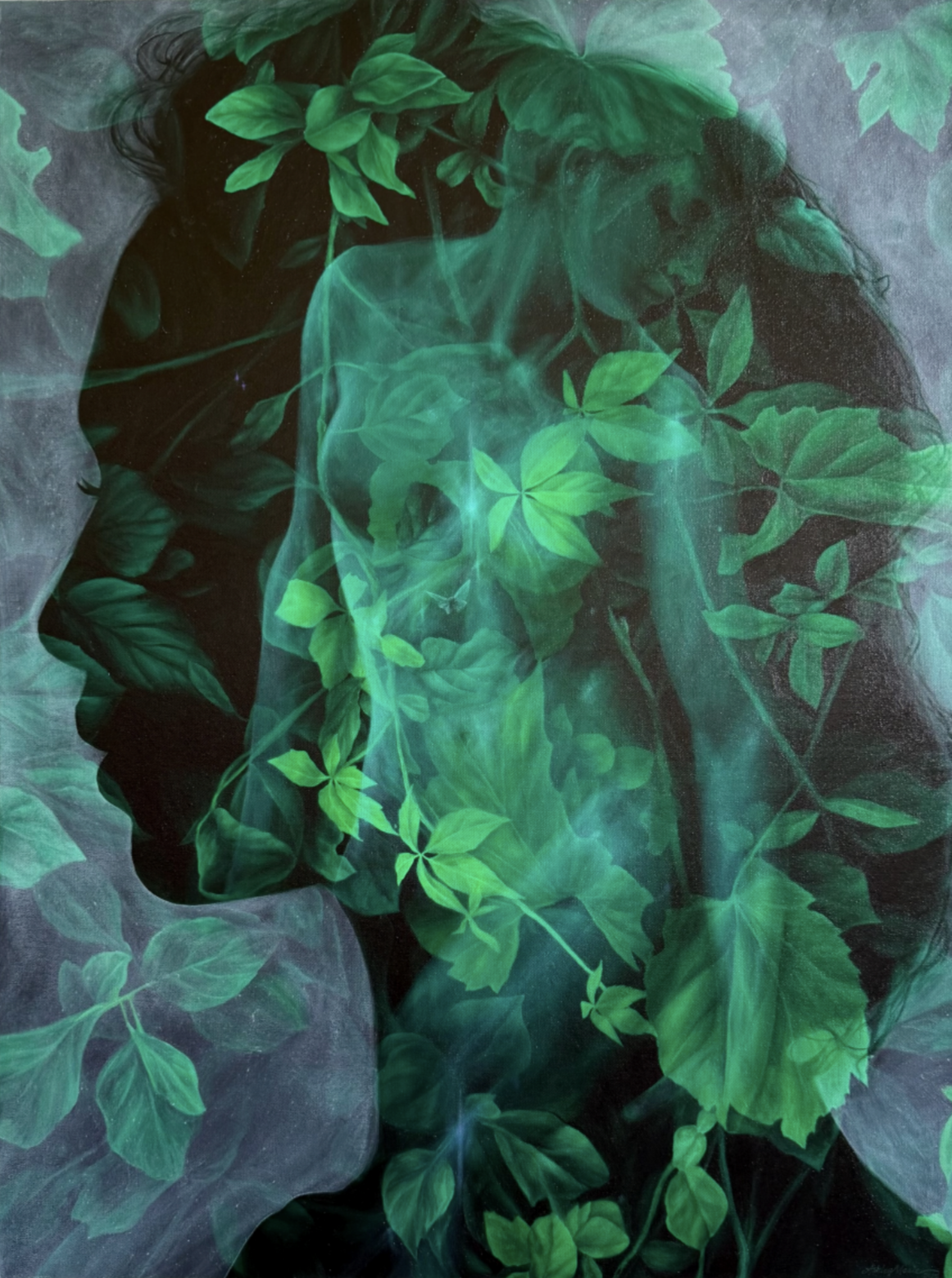
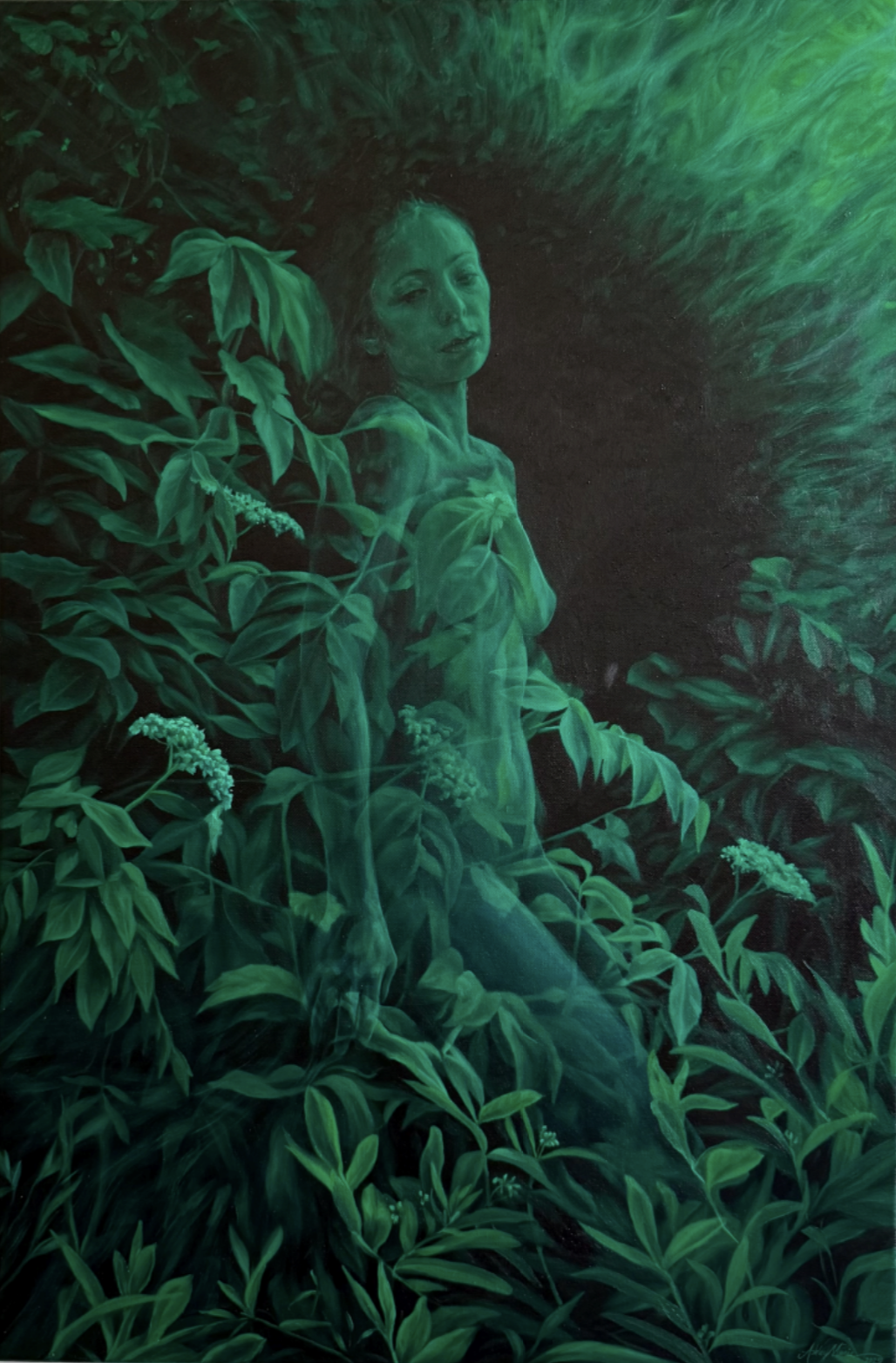
From the beginning of the Surrealist movement in the early 1920s, artists and writers in the wake of World War I searched for ways to break free from the rational thinking they felt had failed society. The Surrealists developed a language to explain what lies beyond logic using dreamlike imagery to weave together the subconscious, nature, and the figure. Ashley Marie's most recent paintings expand upon this imagery by exploring the sensation of being in one place while sensing another and creating paintings you don't just simply look at, but that seem to look back at you.
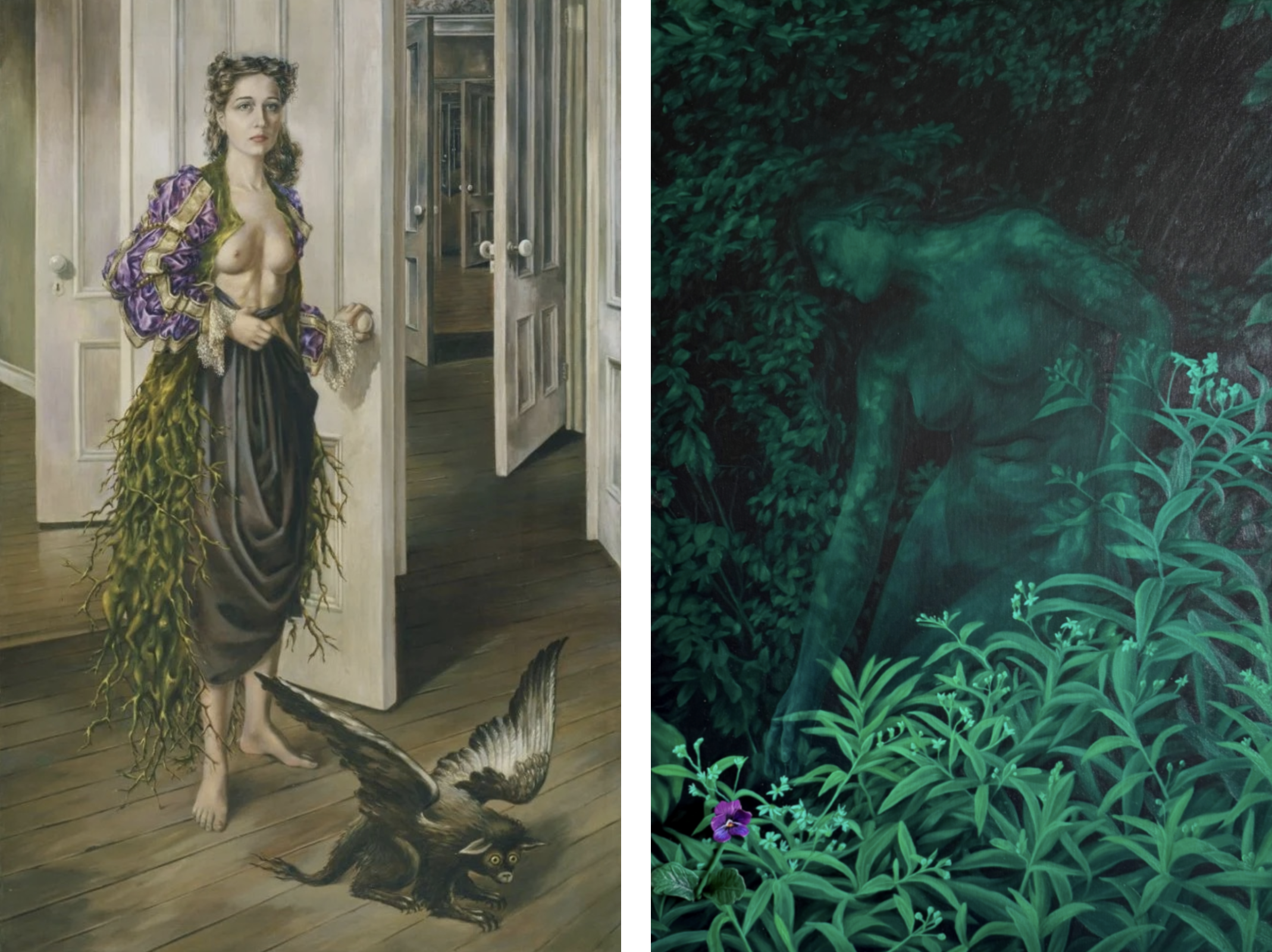
(Left) DOROTHEA TANNING, Birthday, 1942 | Oil on canvas, 39 × 31 inches
(Right) ASHLEY MARIE, Her Sign, 2025, | Oil and mixed media on canvas, 36 × 24 inches
Over the past several years, Ashley's work has started to enter quiet conversation with women artists who expanded Surrealism beyond dream imagery into mythology and creation. Artists such as Leonora Carrington and Dorothea Tanning treated the figure as a site of becoming by placing them in threshold spaces.
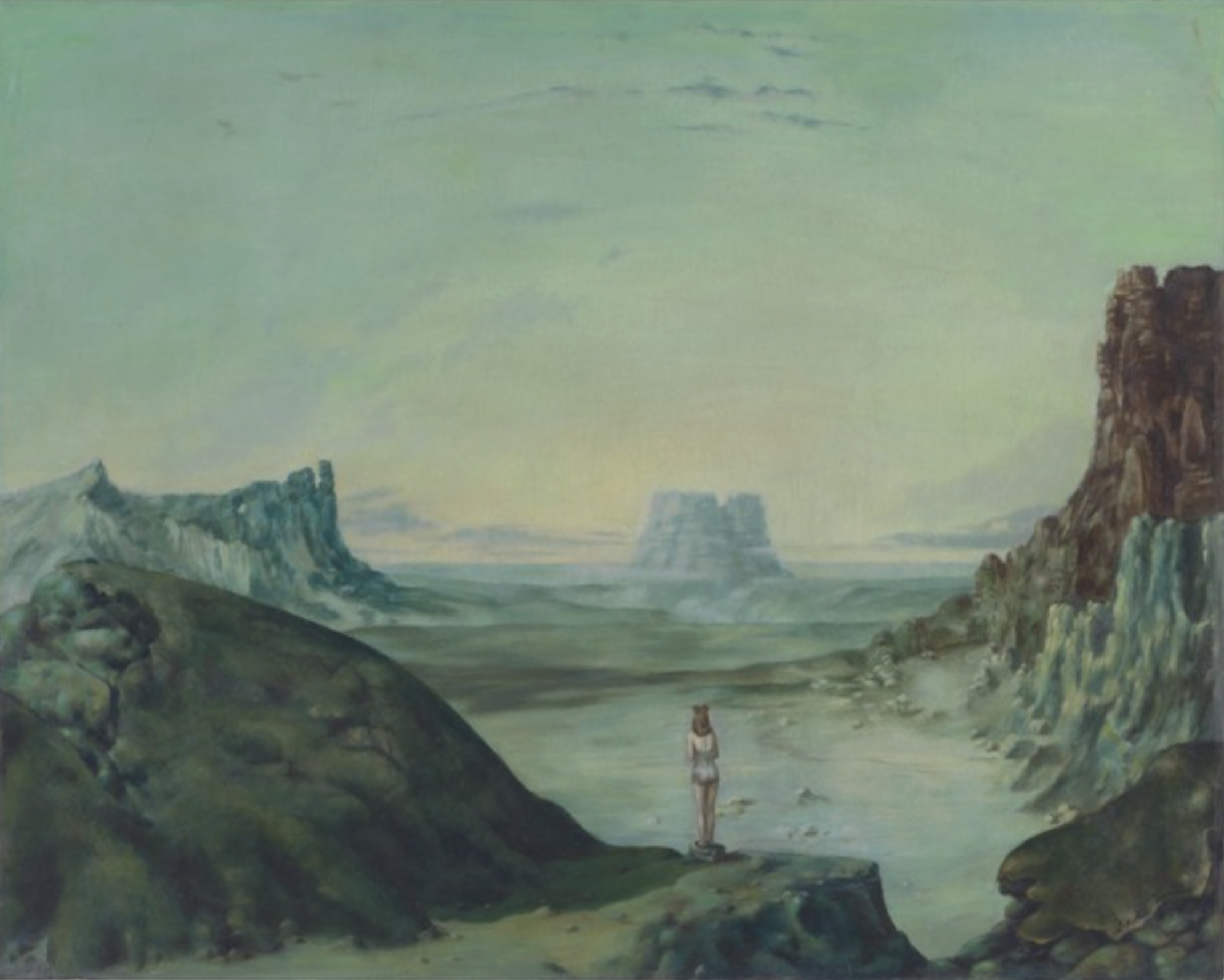
DOROTHEA TANNING, Self-Portrait, 1944 | Oil on canvas, 24 × 30 inches
San Francisco Museum of Modern Art
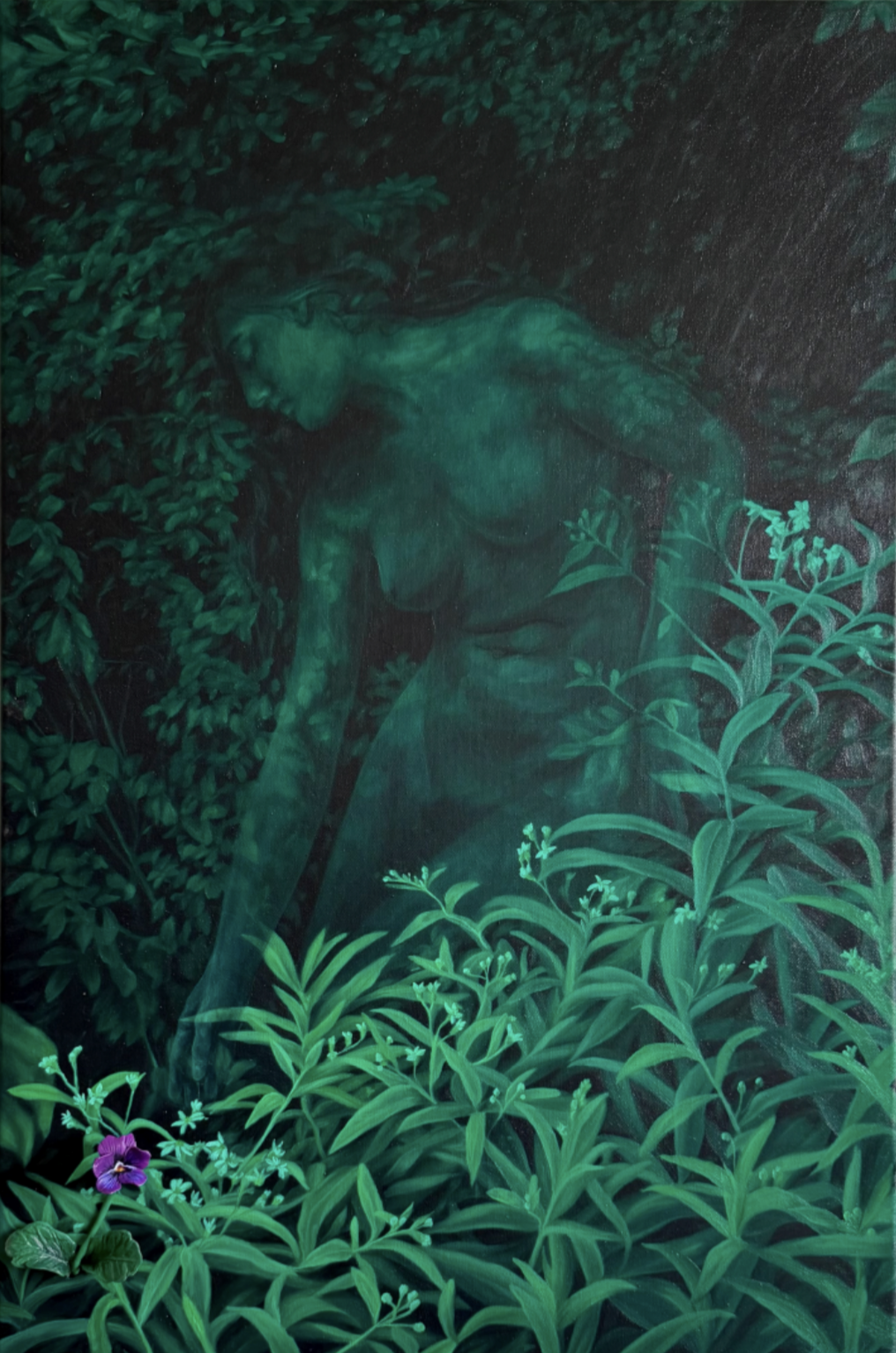
Ashley's closest conceptual resonance is with artist Ana Mendieta, whose earth-body works dissolved the boundary between human presence and the natural world. Where Mendieta used performance and photography, Ashley uses painting. She paints her figures as doorways, temples and portals that describe a new beginning.
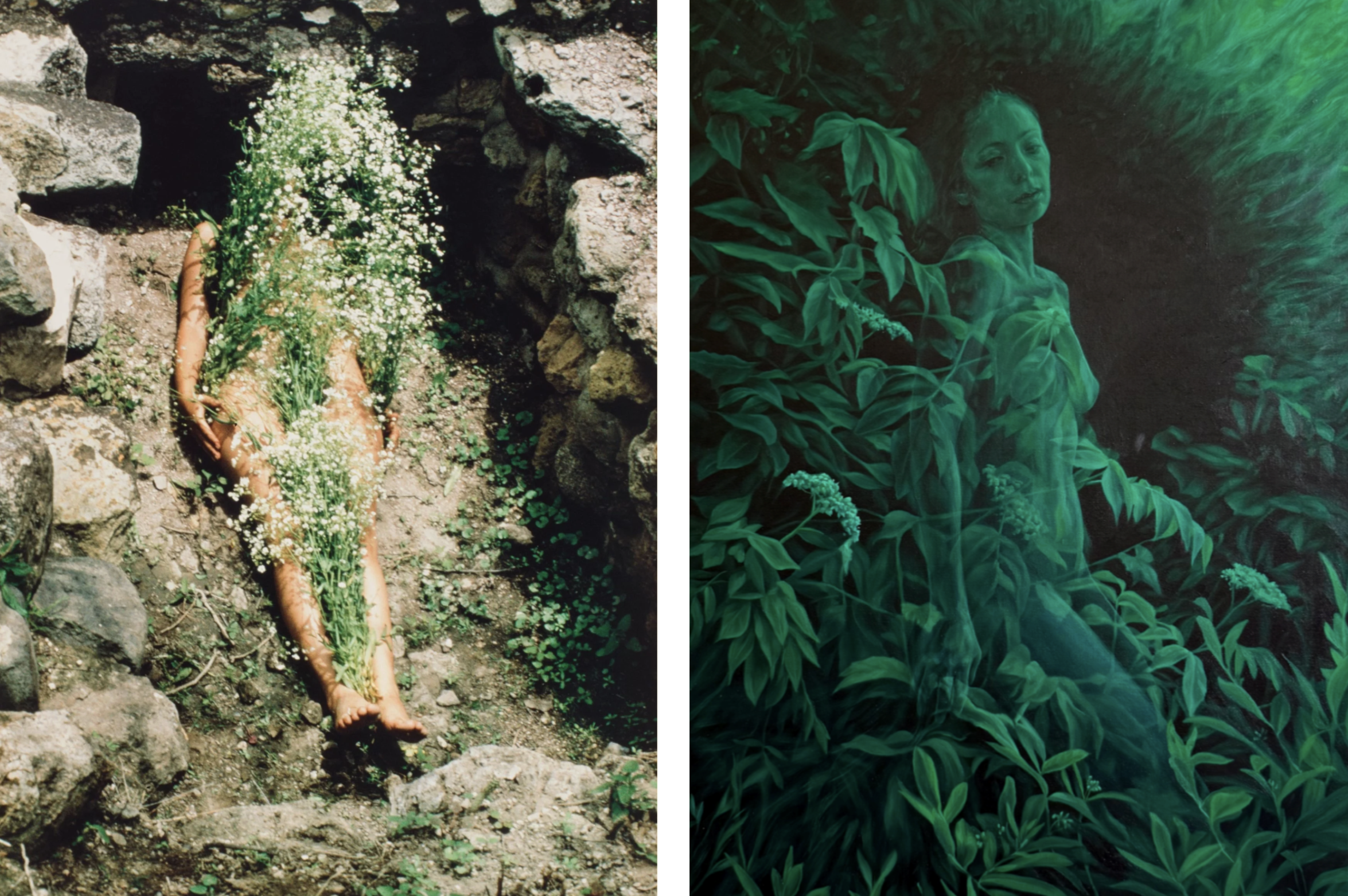
(Left) ANA MENDIETA, Imagen de Yagul, 1973 | Chromogenic print, 20 × 13 3/8 inches
(Right) ASHLEY MARIE, Seat of the Soul, 2025, | Oil on canvas, 36 × 24 inches
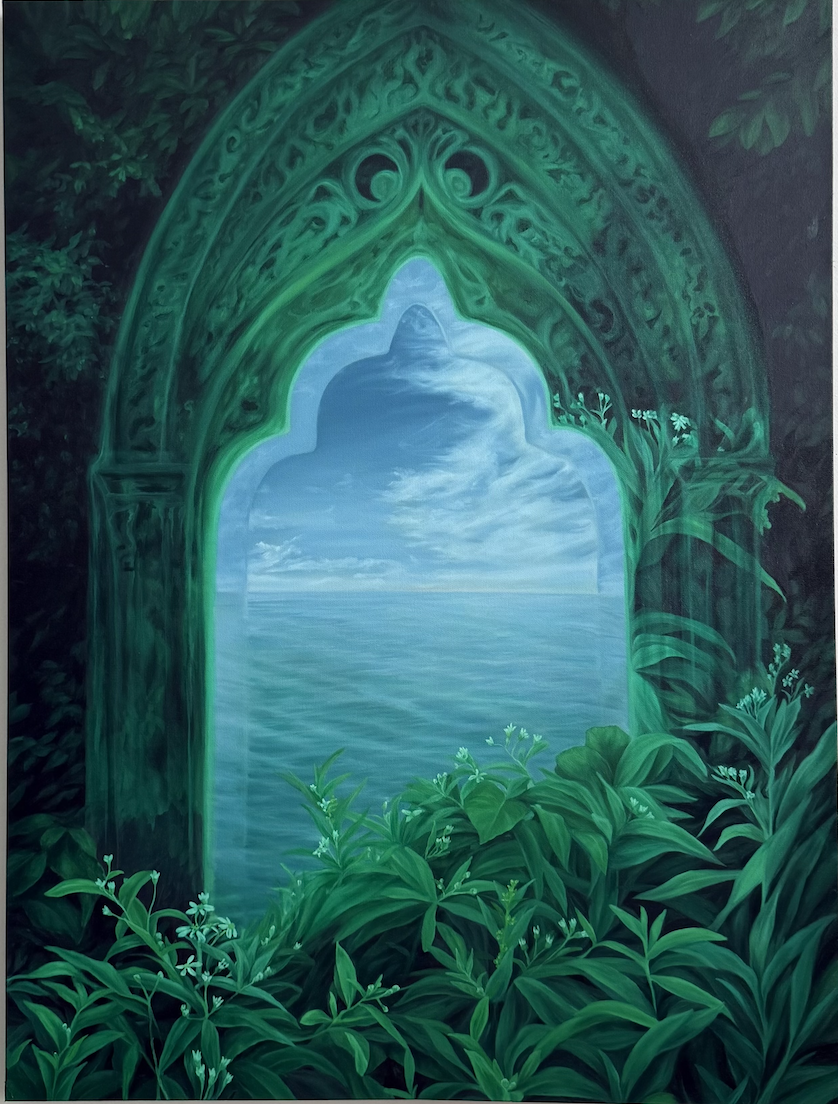
In her newest body of work, Ashley shifts away from figures filled with foliage toward architectural thresholds that function as portals. These openings suggest moments of passage rather than narrative scenes and spaces that feel simultaneously inhabited and unoccupied, as if held between worlds. She describes these paintings as emerging from the sensation of being in one place while sensing another.
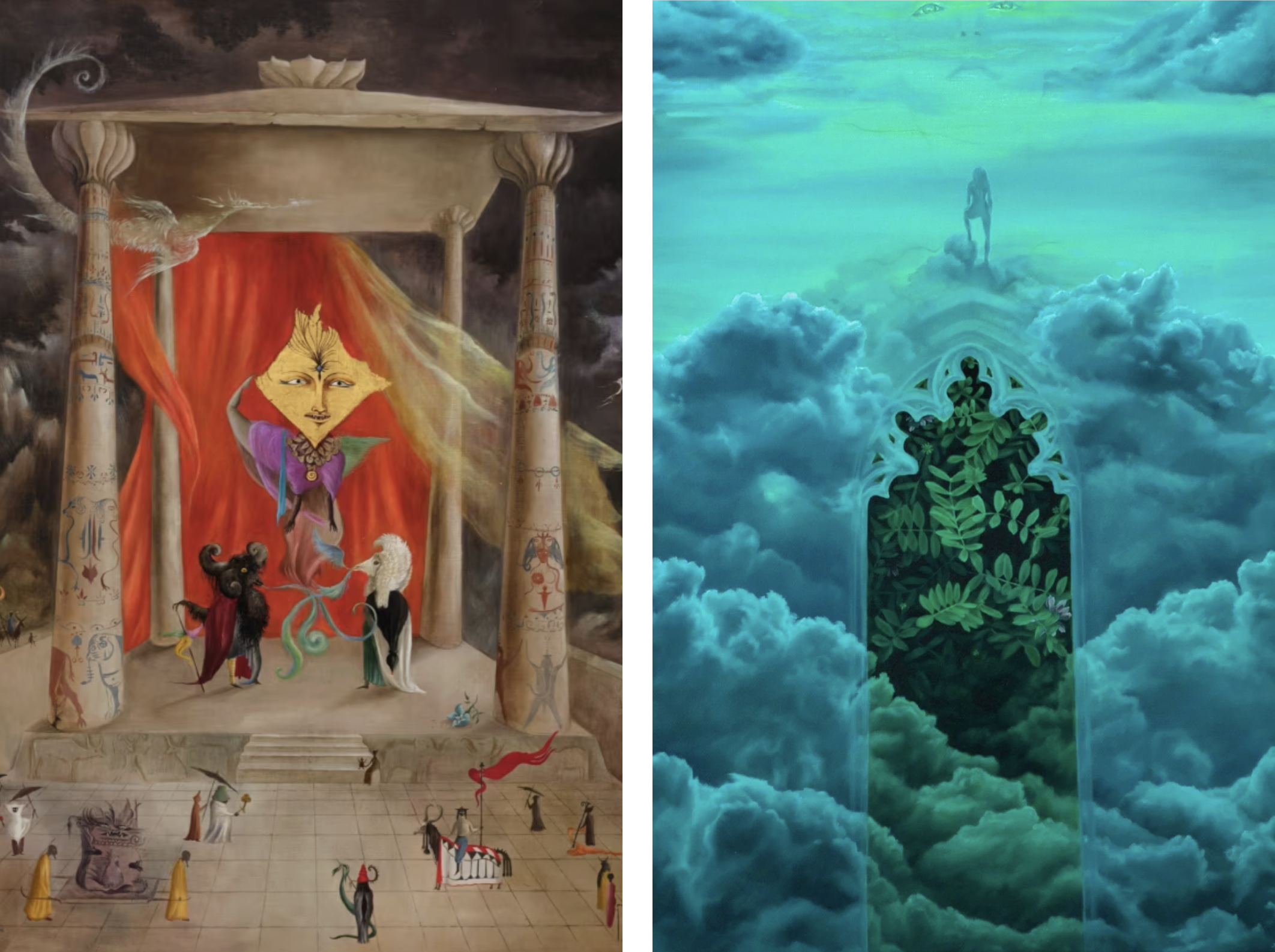
(Left) LEONORA CARRINGTON, Temple of the Word, 1954 | Oil and gold leaf on canvas, 100 × 80 centimeters
(Right) ASHLEY MARIE, Entrance, 2025, | Oil on canvas, 36 × 24 inches
Her portals operate as “figures without figures,” less literal doorways than threshold conditions where distinctions between here and there and now and then, become porous. Influenced by ideas of cyclical time and what she refers to as “time tides," in this shift, the figure recedes and the viewer is invited to step in.
“The new portals do not lead away from the body,
but reposition it.”
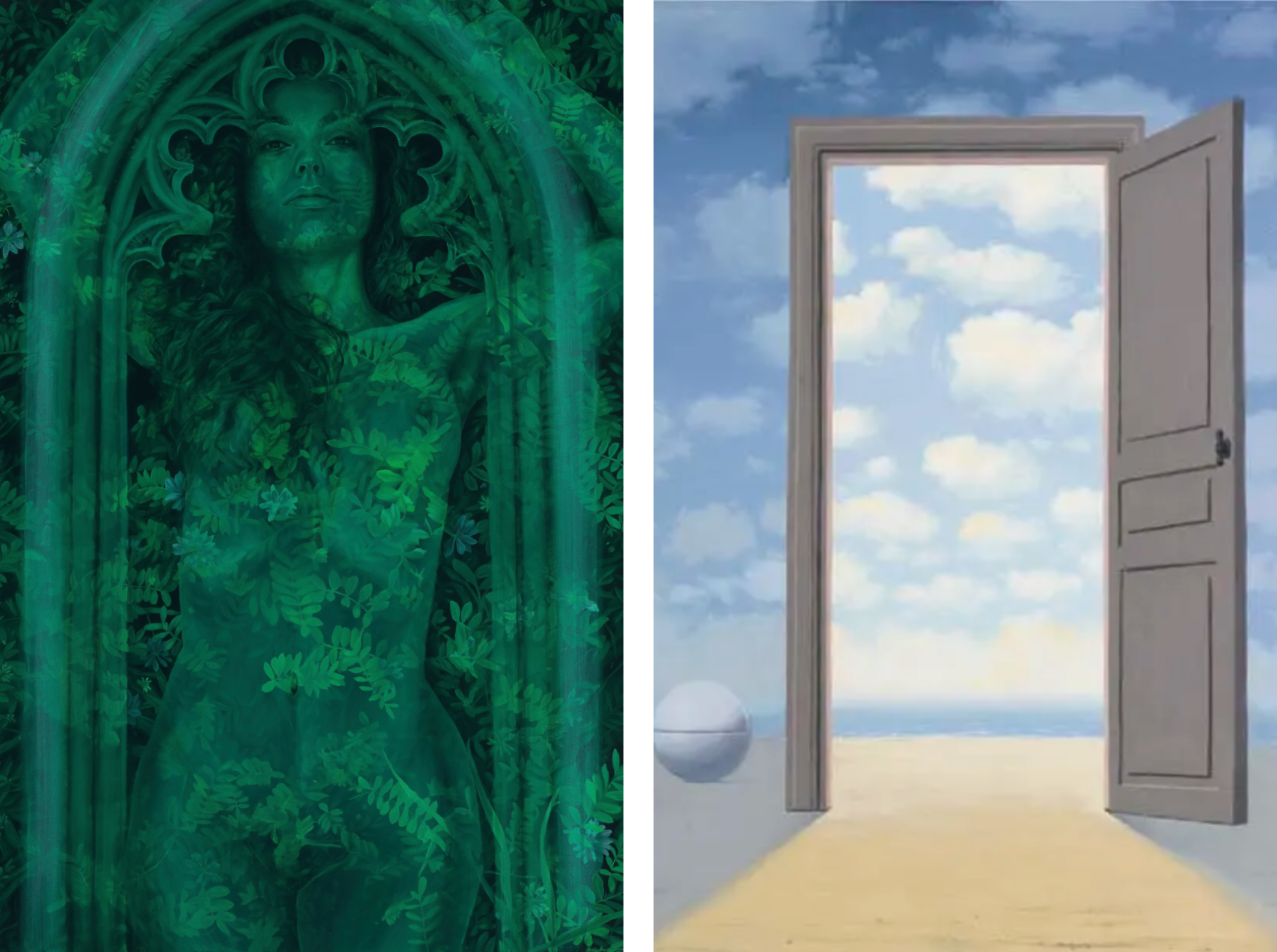
(Left) ASHLEY MARIE, I Am the Door, 2024 | Oil on canvas, 36 × 24 inches
(Right) RENÉ MAGRITTE, L'embellie, 1962, | Oil on canvas, 25 5/8 × 21 3/8 inches
While Surrealism's public face is often associated with figures such as René Magritte, Salvador Dalí, and Max Ernst, whose work emphasized psychological rupture and dream logic, Ashley Marie's paintings extend a different legacy. Hers is a Surrealism focused on presence rather than disruption and that treats portals not as escapes, but as invitations.
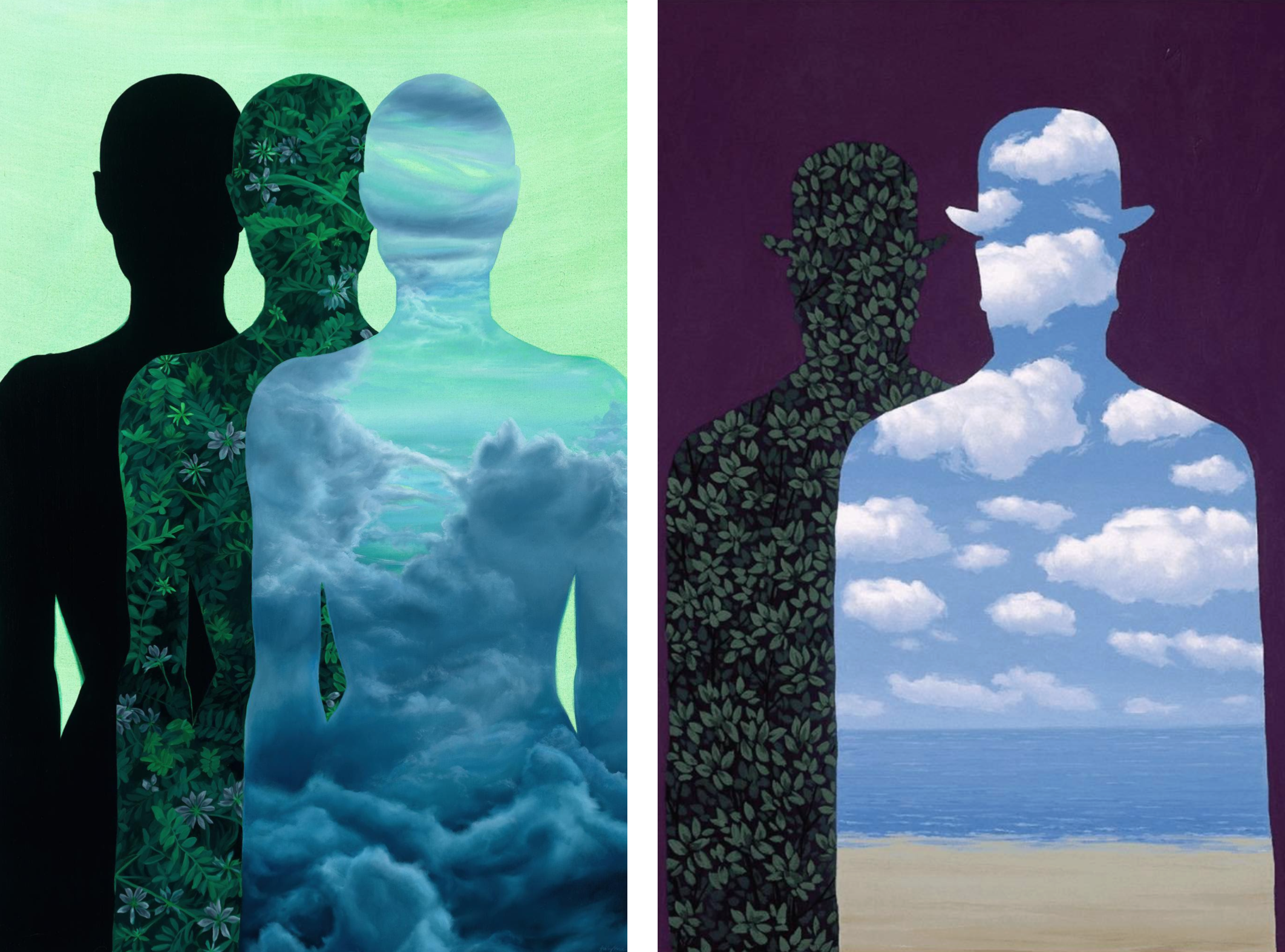
(Left) ASHLEY MARIE, Three Kingdoms, 2024, | Oil on canvas, 48 × 36 inches
(Right) RENÉ MAGRITTE, La Belle Société, 1965-1966, 81 × 65 centimeters
This new body of work marks an important evolution in Ashley's practice. As her paintings scale up, the portals deepen, becoming immersive fields rather than symbolic motifs. Asking viewers not simply to look, but to stand before them, to enter a space where perception slows, boundaries blur, and seeing becomes reciprocal.
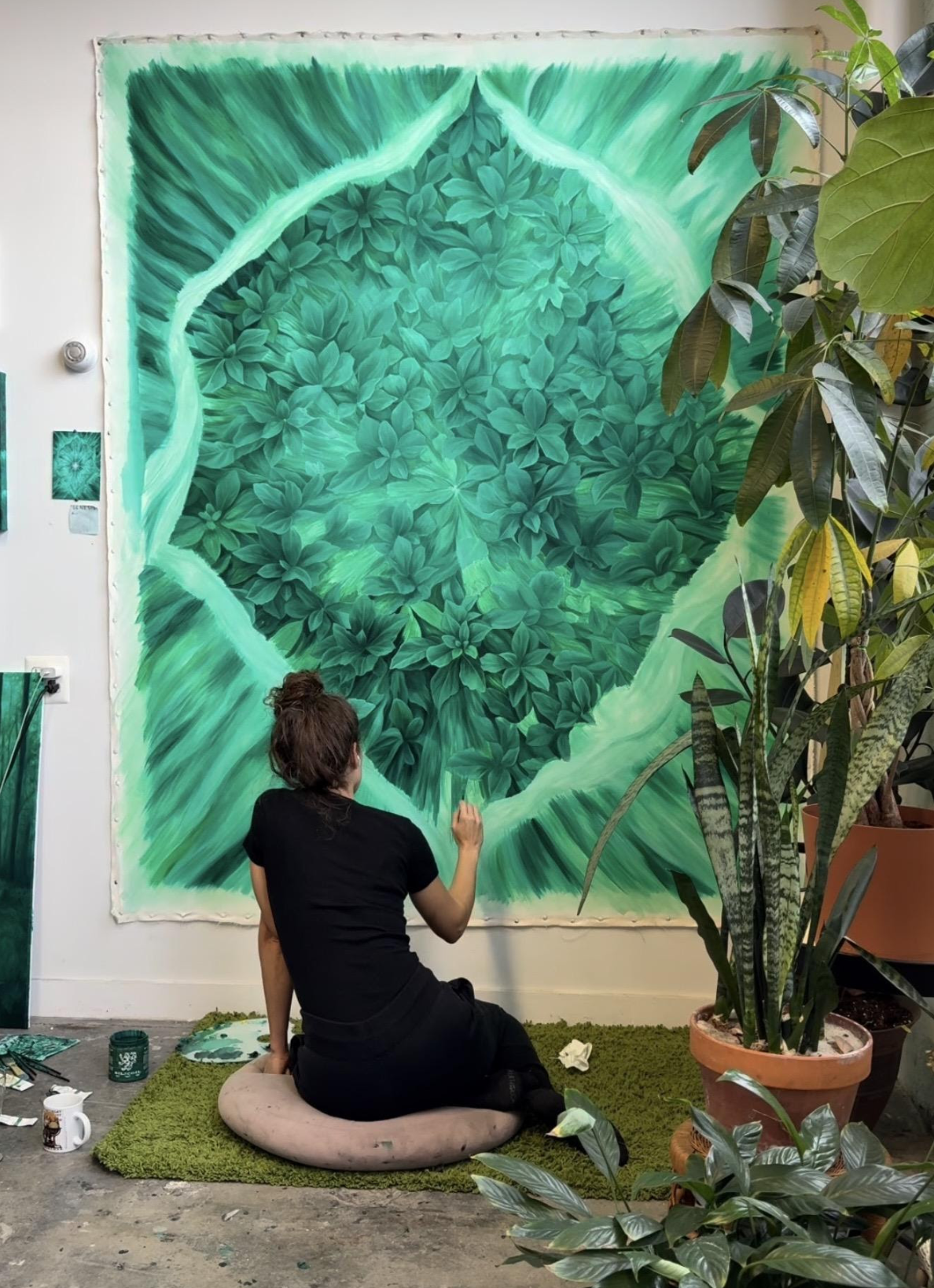
Photo by Ashley Marie
ASHLEY MARIE
Oil on canvas
82 × 63 inches